How To Become A Stronger Candidate For Future US Opportunities
The Resource Center content, including all videos and other media, is for informational purposes only. You should not construe any such information or other material as legal, tax, investment, financial or other advice. The advice and information contained in the Resource Center is not a substitute for advice from a professional who is aware of the facts and circumstances of your individual situation
Summary:
How can you become a stronger candidate for future U.S. nursing opportunities before your visa is approved or an interview is scheduled? In this resource, Health Carousel International shares practical steps you can take now to strengthen your clinical judgment, gain higher-acuity experience, improve documentation and communication skills, and build familiarity with U.S. nursing terminology and culture. Learn how intentional preparation today can help you become a more confident, capable, and competitive nurse for future opportunities in the United States.
Transcription:
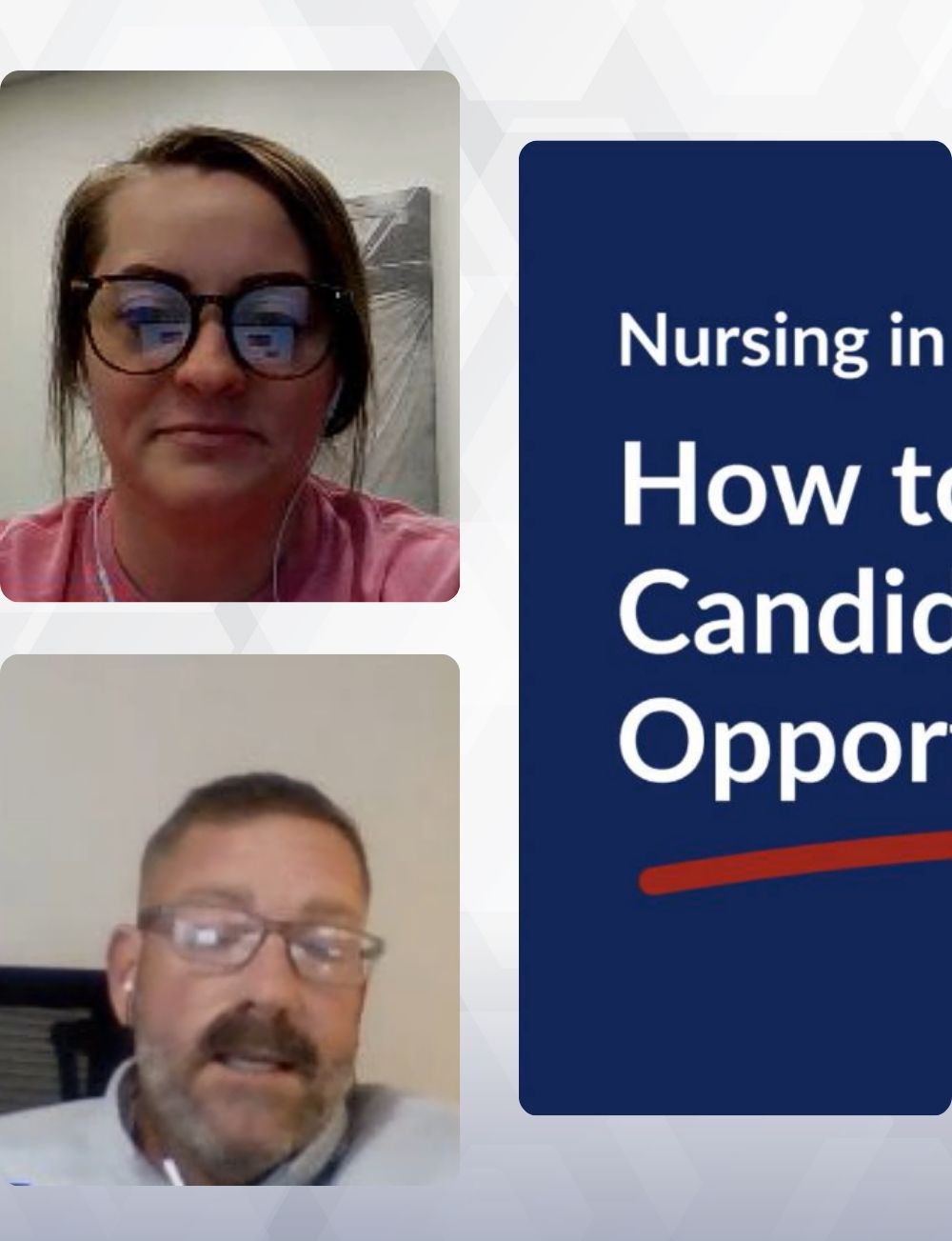
Thank you for joining, Ash and I, today to talk about how to become a stronger candidate for the future US opportunities. So today's topic is one we hear about all the time. How can I become a stronger candidate for future US opportunities?
Right. And so here's kind of the big idea. Right? Preparation doesn't begin when your visa moves or when an interview gets scheduled.
It begins right now, today. And so the waiting period that you may be in isn't empty time. Right? It's building time. And so it's the experience that you gain through your knowledge and expertise in your role.
So, Brad, where do we even start with this topic?
Yep. Let's talk a little bit about the specifics, practical things that you can start to do right now.
Yes. So first, we will kind of touch base on mindset.
So you can't always control the timeline, but what you can control is how you prepare and how confident you are when the opportunity does arrive. So why not start now?
Yep. So think like an athlete before the season. When the moment comes, you don't want to be getting ready. You want to already be ready.
Exactly.
So that's a great analogy. And so that starts with clinical judgment. Right? So US nurses are expected to think critically, anticipate changes in patients, and act independently within their scope of practice. So starting today, with each patient you care for, you can ask yourself, what am I seeing? What happens next?
And what would I do if this patient deteriorated?
A simple habit after a shift reflecting on one patient's situation, what went well, what would you do differently, that turns everyday experience into intentional growth.
Exactly. And so that kinda leads us into our next, segment, which is, you know, the higher acuity specialty experience. Right? So next thing you can do is seeking higher acuity experiences and build your specialty expertise. So US facilities value nurses who can handle complex patients.
So, like, think ICU, step down, ER, telemetry, and higher acuity med surg. So which is exactly why we are consistently encouraging our candidates like yourselves to gain this experience now rather than waiting till you're already here.
If you can't change units right now, look for other opportunities. Volunteer for the more complex assignments. Ask to precept or float. Say yes to learning opportunities that may be new experiences for you.
And so go deeper, not just wider. So become the nurse who truly understands your patient population that you're caring for, the pathophysiology, medications, the common complications. So depth makes you stand out and makes you practice safer.
And so our next topic that we'll review would be documentation and communication. So take it away, Bradley.
Yep. Now something often underestimated is documentation in in clinical communication. In The US health care, if isn't documented, it wasn't done. That is a standard when it comes to nursing practice. So documentation is very important.
Exactly. Yes. And so, you know, that is something that you can start practicing now. Right? Practice charting, that's objective, specific, and complete. So assessments, interventions, patient responses, all of those are really great examples that you can start practicing now.
And if you're not already familiar with SBAR, which stands for situation, background, assessment, and recommendation, it is a widely used practice in The US for handoffs and provider communication. Practicing it now means that you sound organized and competent when it counts.
Yep. Absolutely.
And so that will lead us right into our next kind of segment or topic. So terminology, culture, and professional habits for US nursing. Right? And so this is a big one to get familiar with US nursing terminology and the culture. Right? So some terms, abbreviations, medication, or equipment names might differ from what you actually are using now. So, you know, something you can, again, take initiative and do and begin today would be reading US nursing resources, right, and watch US based clinical videos so you can build that familiarity with the terms, abbreviations, and that culture that's expected.
Culturally, US nurses emphasize patient advocacy, teamwork, and speaking up for safety.
Yep. A 100%. And so, you know, just to kind of recap. Right? So we are starting today.
Right? So you can sharpen your clinical judgment through daily reflection, like we discussed, seek higher acuity and specialty experiences if you can, strengthen documentation and practicing SBAR on your own, and learning US terminology and culture a little bit at a time. Right? And, overall, maintain the strong professional habits.
None of these require a visa in hand or an interview schedule. Everything on this list is something that you can begin right now.
Exactly. And so that's kind of the biggest takeaway from today's broadcast is you can start now. Right? So your preparation today is an investment in the nurse that you're going to be tomorrow. Right? Stronger, safer, and more confident. And that is what US facilities are looking for in their nurses.
Thank you for taking the time to listen to Ashton and I speak today on how to become a stronger candidate for future US opportunities. We hope you found this information valuable.

Related Resources

Planning for Transportation in the U.S.: What You Need to Know

Planning for Transportation in the U.S.: What You Need to Know
Keep Exploring More Resources
Looking for more guidance? Browse our full collection of resources to support you throughout your journey.
.webp)
.webp)