What’s Changing in the US Nursing Job Market & What It Means for You
The Resource Center content, including all videos and other media, is for informational purposes only. You should not construe any such information or other material as legal, tax, investment, financial or other advice. The advice and information contained in the Resource Center is not a substitute for advice from a professional who is aware of the facts and circumstances of your individual situation
Summary:
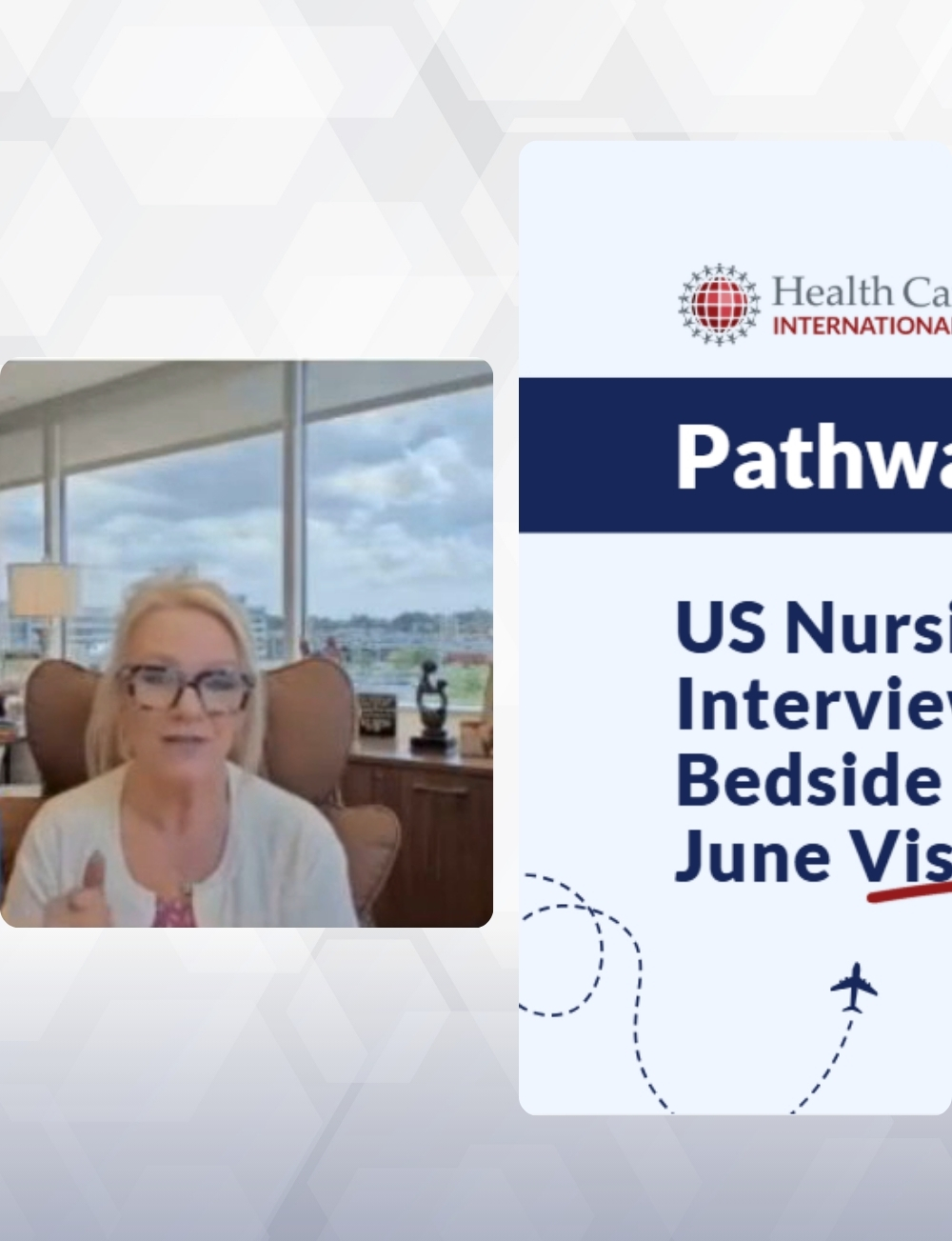
Feeling discouraged by visa retrogression or slow job movement? You’re not alone—and this video is here to help. In this important discussion, Health Carousel International leaders explain why the U.S. nursing process may feel slower today, what’s changing in the healthcare hiring market, and how nurses can stay prepared for future opportunities. Learn why bedside experience, communication skills, and interview readiness are more important than ever as hospitals become more selective in hiring. Plus, hear encouraging insights about the ongoing U.S. nursing shortage, visa bulletin realities, and practical steps nurses can take now to stay on track toward their American Dream.
Transcript:
So right now, I want to acknowledge some of you may be feeling like the process is moving slower than you thought it was going to be. There's a lot of anticipation and buildup. And then when things, get pushed back either through retrogression or, prepping for job interviews or waiting for job opportunities to open, it can often be discouraging. And I absolutely want to, talk through some of the things today that are impacting some of the pauses you may see or the feelings that you may be having around being discouraged.
And really, want to shed light on the current state of the US nursing market. Just like anything in nursing, data is what we need to focus on to drive our decisions. So I'm going to share some data with you about the US nursing market, what has changed, and really let's focus on the things that we all can control and the items that you can continue to keep on your radar to make sure that you are continuing forward momentum with your U. S. Dream.
Bottom line is international nurses are still needed. You know, the nursing shortage is continuing in the United States.
The latest projections are that we will be over a half a million nurses short by the year two thousand and thirty. And that shortage will persist at least through the year of two thousand and thirty seven. So we're talking eleven more years into the future, that we have forecasted this shortage will continue to exist in the United States.
The shortage does vary by region and state. And we do see that particularly rural or non metro areas, disproportionately feel some of those impacts. So the shortage is not equally spread across the United States, And those are things that as an organization, we're helping to navigate through, and identify opportunities to support, you as you think about your journey to the US.
The other big factor that happened in nursing, that I wanted to share with you is that during the pandemic and COVID times, there were over one hundred thousand nurses that just exited the nursing profession. It was a really challenging time. We were struggling with a lot of unknowns, and, that impact continues to persist in the nursing market. In addition to, based on recent surveys, twenty percent of the current U. S. Nursing workforce plan to leave the industry in the coming years, most through retirement. So that attrition will be felt at the bedside as well.
There are a couple of factors that are leading to the US nursing shortage. Number one is the education pipeline is limited. We have some shortage gaps in the nursing, education component of what we do. So in academia, we don't have enough educators, to teach the programs here in the U. S. To produce the nurses that we need to close the gap. And at the same time, we have an aging population.
So not only are those twenty percent of nurses who are planning to leave the profession, in the coming years who are retiring, not only is that a dynamic factor that's related to the aging population, But as you and I both know, as individuals get age sixty five and older, that drives higher demand for health care. So the hospitals are busier, there are more people needing care.
Opportunities do still exist in U. S. Hospitals. The different dynamic that I'm going to spend a little bit of time talking to you about today that you are most likely feeling is that there's been a shift in the market and hiring today.
And I just want to continue to talk through, our time together today about how critical it is for you to remain ready at all times, so that when opportunity does arise, you have everything in line, to move forward.
Why things feel different now. So, you know, we talked briefly. I shared about the mass exodus of nurses during COVID pandemic times. And, you know, that's important to talk about because, you know, I want to focus on what the market felt like six years ago. And a lot of times that is shaping what we are expecting to continue. So during and after the pandemic, hiring was usually fast. You felt more, more movement on open job orders, opportunities to interview.
You saw more openings across the United States. Hospitals were faced with urgent staffing needs during COVID. Many of the, timelines that they traditionally functioned on to hire were much more direct. They often removed a lot of the red tape and went straight to interview and offer because the need was so critical to get nurses to the bedside to care for the COVID patients.
And those decisions happen quickly. Prior to COVID, you know, we actually functioned in an environment that's much more similar to what we see today. But in your perspective, having been with the organization, if you were with us from twenty twenty, through today, twenty twenty and forward was your norm. And so now it does feel a lot different.
Today's environment, is definitely much more typical of what you will see in acute care organizations.
And, really nursing leaders and the hiring process has gotten much more selective.
So understanding that, you know, the pandemic has resolved, we are back to more of an operating norm within the organizations, hospitals are managing their budgets and their costs very, very closely. So decisions for hiring, are often pending, budget review and approval. There are often other strategies that are being, considered from a budgetary perspective before they can approve hiring of specific roles. Facilities are using internal and short term solutions first to help close the gap before they are, hiring additional headcount. And those timelines feel longer, and they are longer, and they're a bit less predictable.
In twenty twenty, you could almost guarantee if you interviewed, you were getting an offer. Today, it's much different.
The other thing that I wanted to, share with you is that, from an opportunities perspective, the data does reflect that there are approximately one hundred and ninety three thousand RN openings per year, that have been pacing the last several years and are expected to be consistent through two thousand and thirty two. So the openings are there. The difference is the hospital has the ability to take a longer time to look at all of the talent that are applying for those positions.
They're much more selective, in who they are, setting up for interview. And, you know, so that becomes an important thing. And that does feel slower.
And those multiple factors that we just talked about are really the primary drivers behind, those of you that may be feeling like it's moving incredibly slow.
So I want to talk briefly about what hospitals are looking for today. Because this is really the foundational piece of the slower movement and activity from hospitals. You know, once they work through budgets, they get approval, they've utilized some internal resources to try to fill the gaps before they hire. You know, once they get down to having approval to hire for positions, I think it's important for you to understand the key things that a nursing leader is seeking in anyone applying for an open position in their organization.
If you think about all of the layers of approval, that I just walked through that they're going through today, once they secure those positions, they want to make sure they get that hire right. So there are four key things that I'm going to talk through in a little more detail with you, that are at the forefront of every nurse leader's mind who is sitting down to interview talent for open roles. The very first one is recent bedside experience.
I think this is the first one intentionally because I believe this is by far the number one determining factor, when a nurse leader is looking through candidate resumes determine who they want to interview for a position.
Despite the nursing shortage and the openings, I think it's important to remember that in most cases, you will not be the only nurse who is wanting to interview for an open position.
So it's very important to think about, you know, the hiring process through the lens of that nursing leader. I did this for many, many years when I worked in hospitals. And oftentimes, I'd have one open role, and I might have six resumes in front of me for people that I could consider for my one open role. And so when I went through and I looked at those six resumes, I was looking for the ones that rose to the top for me.
Who stood out? Who had the bedside experience? Who had the strength, in previous practice that I knew would be a good option to interview. One of the most stable indicators of someone's performance when you hire them into a role in a hospital is their past performance.
So that's really important for a nursing leader. The other piece of that that's really important is that in addition to having the nursing shortage in the United States, we're also experiencing another dynamic that is called the experience complexity gap. So as you think about, veteran nurses, and I know we all know them that have been working at the hospital for five, ten, fifteen, twenty years. You know, when we've done nursing for that long, you almost get you develop, a sixth sense.
Right? You have so much history and experience caring for patients that your critical thinking skills are really, really high. Your clinical reasoning skills are also very sound because you've taken care of patients for so long.
But what happens is those individuals at the bedside today are part of that aging, population that are exiting the bedside. So we have all those years of experience in the US that is leaving the bedside.
At the same time, we have a rise in demand for health care, and those patients are more acute now than they have ever been. So the experience complexity gap is representing the years of experience at the bedside continues to drop while the complexity of the patient continues to rise. So the gap that forms there is the experience complexity gap.
It is critical at any opportunity that you have to hire and bring new resources into a nursing unit to try to bring in nurses that have experience. That has become the number one indicator, because experience is something you can't teach. It's something that comes from being at the bedside, caring for those patients, and that is an invaluable skill.
So if I were to sit at my desk, and I have six resumes in front of me for my one open position, and three of the six have bedside experience and the other three don't, the other three will automatically get turned over and pushed to the side, and I'm only gonna focus on the ones with bedside experience. And so, you know, that for me is my, my number one thing I believe that you can do to ensure you are ready and give yourself the greatest chance and opportunity that when, a job opening, is presented to you, that your resume is going to rise to the top when that nurse leader starts looking through the possible candidates for that position.
The second thing that is really important for nursing leaders is strong communication skills. It's very important to know that you are bringing on an individual to your team that has strength of communication for a lot of the reasons we've already talked about. You know, the patients are more complex, they are more sick, The pace of care in US hospitals is pretty quick. And so it's really critical that you are able to communicate effectively.
The communication extends to your patient, being able to articulate what you're assessing and seeing with your patient into the remainder, of the care team to make sure that patients are cared for well. It's also really important if you think about team dynamics for the other nurses on the unit. So strong communication skills, absolutely, number two, right behind that bedside experience. And so the things that I would encourage you to do as you continue on your immigration journey and your journey to becoming a USRN is work on things that will strengthen your communication skills.
Make sure that you are using English, at all opportunities so that you continue to have excellent communication skills, so when the opportunity presents you are ready.
The third thing is clinical confidence. Your clinical confidence is going to show through when you are on the interview with that nursing leader. But there are ways that we can assist you and support you when you're working on your resume to make sure that your clinical confidence shows through in your experience. This also really ties closely to that recent bedside experience.
Because clinical confidence only comes to you through having put a lot of repetitions in and worked a lot of shifts and taking care of a lot of patients. I remember back when I was a new nurse and I would be very nervous before my shift. I remember, you know, in the first year or so, if I would have a patient that started to, have decompensation, you know, some health challenges during their admission, You know, I would get a little anxious. I could feel myself get nervous.
I had to go back through my mind and think about all the things I needed to do to make sure I did my assessment and try to help take care of that patient.
After you've done that ten, twenty, thirty, forty times, that becomes very second nature to you. And so you start recognizing decompensation much quicker. You can respond to that much quicker.
You're a much more, effective nurse, and the patient outcomes are better.
There is so much data tied to patient outcomes with the nurse's level of education experience. So clinical confidence is really, really important. The other thing that we will do here at PassportUSA is we have a full internal clinical team that can help you prior to your hospital interview. And we'll do some interview prep with you to make sure that you're as prepared as possible so that you come across to that nursing leader with the clinical confidence that you possess.
The fourth, item I think that I wanted to talk through just briefly with you is flexibility and preparation. You know, flexibility, I think, in today's market is really important.
You know, oftentimes the job opportunity may not come in the form you exactly wanted it to be. And it's really important. And nursing leaders are looking for talent to come into their organization that is flexible, and they are open to different pathways or, different opportunities within the organization. So how that may, materialize for you would be if you have your, your mindset that you're only gonna go to a step down unit.
That's the only place you wanna work. And you you know, we find an opportunity, and this opportunity looks fantastic to you. You love the location. You love the type of facility, whether it be in acute care, subacute care, long term care.
It's exactly where you want to be, but it's not the unit you want it to be in. And so, you know, those are places where we can work through with you and ensure that you have the right clinical skill set, to perform in roles that are being offered to you. And then making sure that we're super flexible. Right?
You know, don't lock yourself into, I'll only do this one very singular specialty. Being open and flexible to opportunities.
And preparation. You know, being prepared when a job opening comes available is really one of the primary things that you can control, and it's one of the greatest gifts you can give yourself.
You know, in this time while you're waiting, make sure that you are doing everything you can, ensuring you're staying at the bedside, getting experience, you're communicating in English, practicing those skills every day, and really making sure that you're working closely, you know, keeping your resume fresh, making sure that, you know, those pieces are all ready so that when something opens up, you are ready to go.
You know, resumes are really, really important. We know you well because you've been with our organization and you've developed great relationships with your assignee.
But to a hospital leader that we are presenting resumes to, they don't know you other than what they see on the resume or that piece of paper. So there are critical moments in your journey where we need to make sure that your resume stands out. Going back to the example that I shared earlier, in the process how nursing leaders will go through, you know, a stack of resumes to determine who even gets a chance to interview for a job at their facility, we want to make sure that your resume stands out. There needs to be something on there that grabs that nurse leader's attention and says, wow, I want this nurse.
And so through our resume process and working with your assignee, we are going to be laser focused on looking at your experience, making sure that any accolades, certifications, things that you have done that will set you apart are highlighted in that resume so that you get the best chance to stand out on that resume and get the opportunity to interview for the positions that you're interested in. So my key takeaways for you today. So the opportunity is still there even if the process feels uneven. My message for you is not to get discouraged, but to stay the course and focus on the controllables that we talked about today to make sure that you're positioning yourself for opportunity when it creates itself.
Preparation positions you for the opportunity.
What you don't want to have happen is your assignee reach out and let you know that there is a job opportunity they want to submit you for, but you've not been working. You've got a year or two years clinical gap, or you've not been yet leveraging and practicing your English skills. And so when it comes to having a live interview over a Teams channel, you're apprehensive about your English skills.
Those are things we can't fix quickly. So that really is a call to action that the time is now for you to make sure that you are prepared. And stay ready, for that right opening. It will come.
The environment might look different right now, but your goal is still absolutely in reach. The most important thing you can do is continue to stay ready.
Opportunity happens when multiple factors align. I'm gonna close on this, because I think I have spent a fair amount of time today talking about the change in the US nursing market and how the interview and hiring process had gone from really, really fast in twenty twenty through probably twenty twenty three.
And now we're seeing a much more selective and often what feels like slower process happening. That is one of three factors. Right? So, I love this slide because it does a nice job showing, how the three factors, line up that will support opportunity being successful. One of the other large components that is out of our control is visa retrogression.
And so, you know, we have many of you that are retrogressed. It is not a call to stop, dreaming about your USRN goals and making it to the US.
It's merely a slowing in the process. So that is another lever that could move every month when the Visa Bulletin comes out. If we see forward progress and you are all of a sudden current, there's gonna be a large gap to close if you haven't been actively maintaining bedside experience to keep those critical characteristics fresh that you will need to be interviewed and offered a position in the US.

Related Resources

How To Become A Stronger Candidate For Future US Opportunities

How To Become A Stronger Candidate For Future US Opportunities
Keep Exploring More Resources
Looking for more guidance? Browse our full collection of resources to support you throughout your journey.
.webp)
.webp)